Why traditional ATS software fails senior living operators (and the math behind the Speed-to-Lead system)
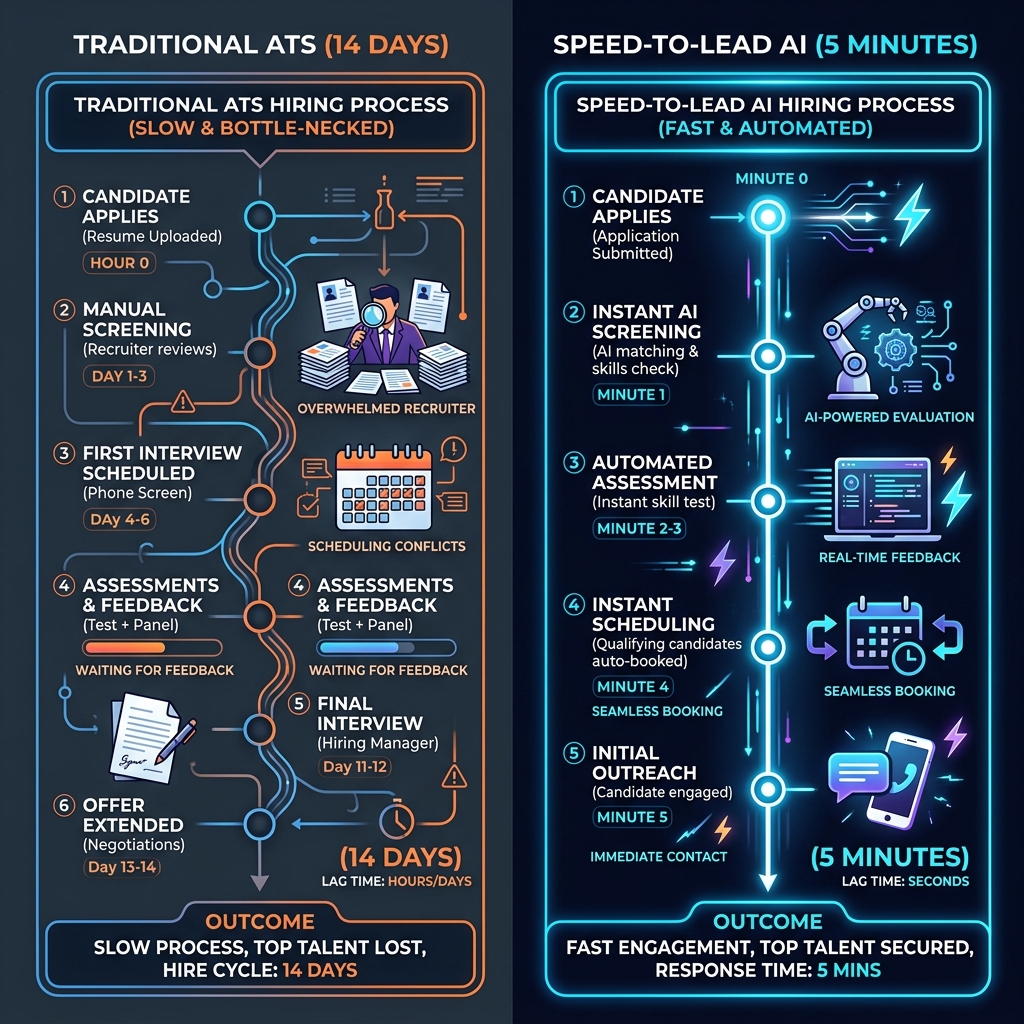
Most senior living operators think they have a "candidate shortage" problem. They actually have a "candidate leakage" problem. The talent pool has not shrunk; the speed required to capture them has just accelerated past what a manual HR process can handle.
Traditional ATS software fails in senior care because it treats hiring as a storage problem, not a speed problem. While operators wait 48 hours to review a resume, competing agencies engage and place that exact same RN candidate in under 5 minutes.
The 48-Hour Drop-Off
Candidate response rates drop precipitously after 4 hours of silence. When a candidate applies, they are highly motivated. If your ATS simply sends an auto-responder saying "we will review your application," you have already lost them.
The math on this is brutal. The cost of a vacant RN seat averages $40,000 when factoring in overtime and agency premiums over a standard 37-day time-to-fill cycle.
The Speed-to-Lead Solution
Autonomous AI recruiting tools invert the process. Instead of waiting for a recruiter to log in, the system initiates contact immediately.
- Instant automated SMS engagement within 60 seconds of application.
- Automated credential and license verification before the interview is even scheduled.
- Self-scheduling interviews directly on the facility calendar, removing the back-and-forth.
By implementing a senior care hiring system, facilities can cut their time-to-fill from 37 days down to 12 days. For a breakdown of how this performs in specific markets, review our local RN staffing data in Hampton Roads.